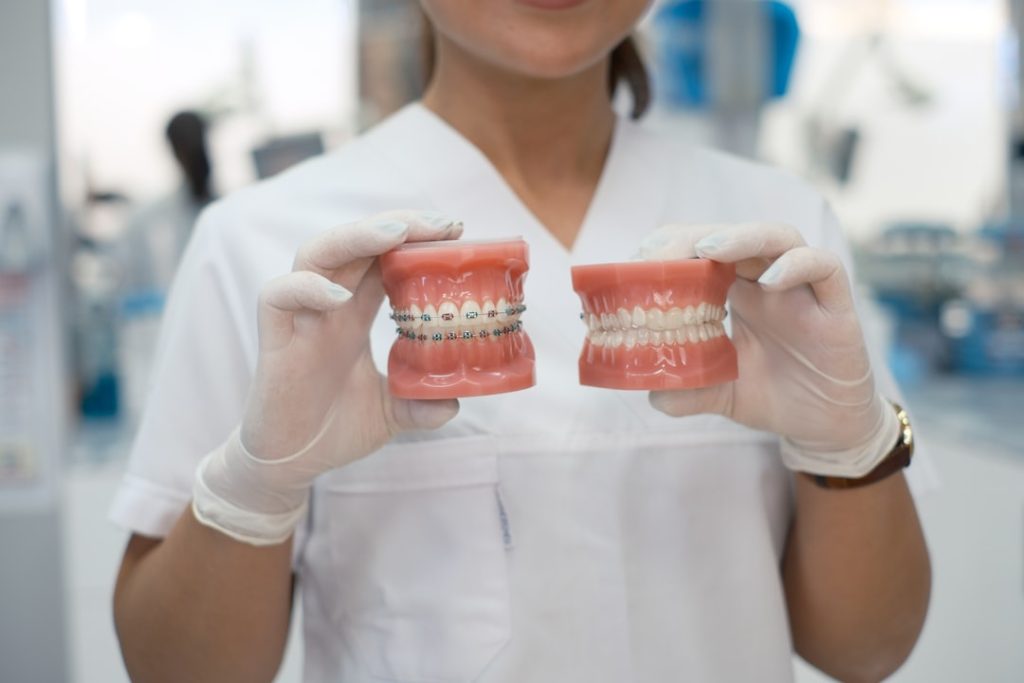
Braces don’t just magically straighten teeth—it’s all science! If you’ve ever wondered how those tiny brackets and wires transform your smile, you’re in the right place. At The American Orthodontic Group, we believe in educating our patients about the orthodontic process so you can feel confident in your treatment. Let’s dive into the fascinating biology behind braces and how they actually move your teeth.
The Process of Bone Remodeling
The key to how braces work lies in a biological process called bone remodeling. Your teeth are anchored into your jawbone by the periodontal ligament, a network of fibers that helps maintain tooth position. When gentle pressure is applied through braces, the bone on one side of the tooth breaks down, while new bone forms on the other side, allowing the tooth to shift into its proper position. This continuous process ensures that your teeth move safely and effectively over time.
How Brackets and Wires Work Together
Braces consist of several components that work in harmony to guide teeth into alignment:
- Brackets: These small metal or ceramic attachments are bonded directly to the teeth and serve as anchors for the wires.
- Archwires: These wires connect the brackets and exert pressure to move teeth into the desired position.
- Elastic Bands: Sometimes used to apply additional force to correct bite alignment.
- Ligatures: Small rubber bands or metal ties that hold the archwire in place.
As your orthodontist adjusts the wires over time, they apply controlled pressure to guide your teeth into their new positions. The gradual nature of these adjustments allows for safe movement without causing damage to the teeth or surrounding structures.
Why Orthodontic Treatment Takes Time
Patience is key when it comes to orthodontics. The controlled movement of teeth must occur slowly to allow the bone and periodontal ligament to adjust properly. Moving teeth too quickly can result in root damage or instability. This is why orthodontic treatment typically takes months or even years, depending on the complexity of the case.
The Role of Retainers After Braces
Once your teeth reach their final positions, the job isn’t quite done. Your orthodontist will provide you with a retainer to maintain your new smile. Without a retainer, your teeth may shift back to their original positions, undoing all the hard work of your braces. Wearing a retainer as prescribed is crucial for long-term success.
Braces may look simple, but the science behind them is anything but! Through the process of bone remodeling and the precise application of force, braces gradually shift teeth into a healthier, more aesthetically pleasing alignment. At The American Orthodontic Group, we’re here to guide you every step of the way on your journey to a confident smile. Ready to take the next step? Schedule a consultation with us today!