Discover the pros and cons of Invisalign vs traditional braces. Find the best orthodontist Hong Kong trusts to help you choose the right treatment for your perfect smile.
Key Takeaways
- Invisalign offers nearly invisible treatment but may not work for complex cases
- Traditional braces are more effective for severe alignment issues but are more noticeable
- Treatment time varies between 12-36 months for both options
- Cost differences can influence your decision significantly
- Your lifestyle and age may determine which option works best for you
- Professional consultation is essential for choosing the right treatment
Understanding Your Orthodontic Options
When you’re ready to straighten your teeth, you face an important decision. Should you choose the clear, removable aligners of Invisalign, or go with the tried-and-true method of traditional metal braces? Both treatments can give you the straight, beautiful smile you want, but they work in very different ways.
Your choice between these two popular orthodontic treatments depends on several factors. These include the severity of your dental issues, your lifestyle preferences, your budget, and your personal comfort level. Let’s explore everything you need to know to make the best decision for your unique situation.
The Invisalign Advantage: Clear Benefits
What Makes Invisalign Special
Invisalign uses a series of clear, custom-made plastic aligners that gradually shift your teeth into the correct position. You wear each set of aligners for about two weeks before moving to the next set in your treatment series.
The biggest advantage of Invisalign is right in the name – it’s nearly invisible. Most people won’t even notice you’re wearing them. This makes Invisalign particularly popular with adults and teenagers who want to improve their smile without the obvious appearance of metal braces.
Comfort and Convenience
You can remove your Invisalign aligners when you eat, brush your teeth, or have special occasions. This means you can continue enjoying all your favorite foods without worry. Popcorn, sticky candy, and crunchy apples are all still on the menu.
The smooth plastic material is generally more comfortable than metal brackets and wires. You won’t have to deal with the mouth sores that sometimes come with traditional braces. However, you might experience some pressure and mild discomfort when you switch to a new set of aligners.
Maintaining Your Oral Health
Keeping your teeth clean is much easier with Invisalign. Since you can remove the aligners, you can brush and floss normally. This helps you maintain better oral hygiene throughout your treatment, reducing your risk of tooth decay and gum disease.
Traditional Braces: The Proven Method
How Traditional Braces Work
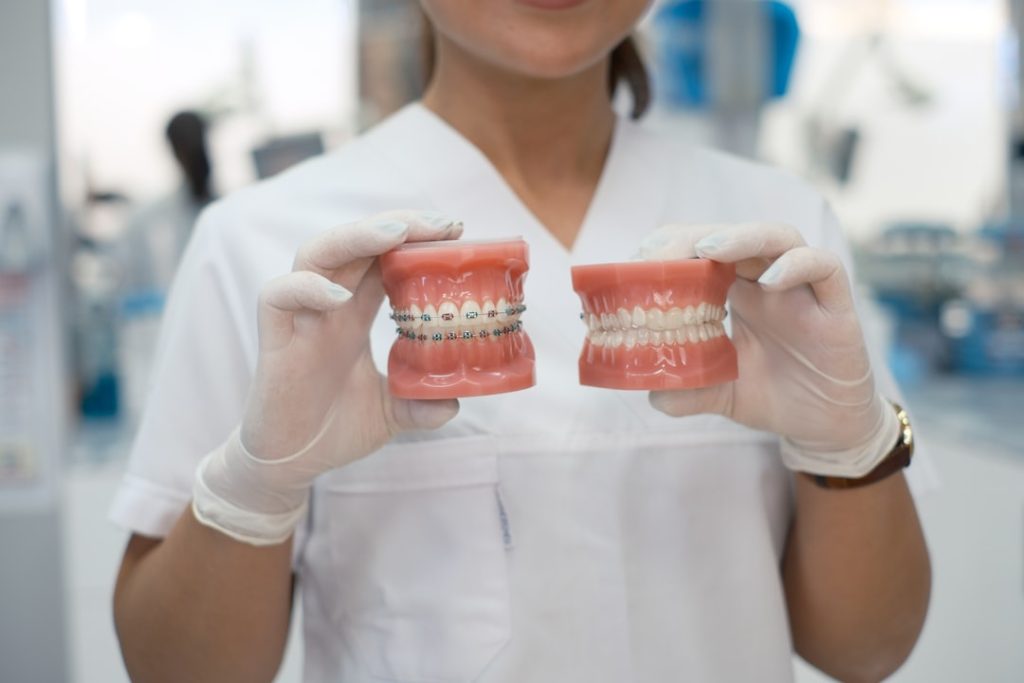
Traditional braces use metal brackets attached to your teeth, connected by wires that are gradually tightened over time. Your orthodontist adjusts these wires during regular appointments to continue moving your teeth toward their ideal positions.
While they’re more noticeable than Invisalign, today’s braces are smaller and more comfortable than ever before. You can even choose colored bands to express your personality or opt for clear or tooth-colored brackets for a less obvious appearance.
Superior Treatment Power
Traditional braces can handle more complex orthodontic problems than Invisalign. If you have severely crooked teeth, major bite issues, or significant spacing problems, braces might be your best option. They provide constant pressure on your teeth, which can be more effective for difficult cases.
Your orthodontist has complete control over tooth movement with braces. They can make precise adjustments at each appointment, ensuring your treatment stays on track. This level of control often leads to more predictable results for complex cases.
Treatment Reliability
Since braces are permanently attached to your teeth, you don’t have to worry about forgetting to wear them. This eliminates the compliance issues that can slow down Invisalign treatment. Your teeth are being moved 24 hours a day, seven days a week.
Cost Comparison: Budgeting for Your Smile
The cost of orthodontic treatment varies widely depending on your location, the complexity of your case, and your chosen provider. Generally, Invisalign tends to be more expensive than traditional braces, though the gap has narrowed in recent years.
Traditional braces typically cost between $3,000 and $7,000, while Invisalign usually ranges from $4,000 to $8,000. However, many factors can affect these prices, including your insurance coverage, payment plans, and the length of your treatment.
Some dental insurance plans cover orthodontic treatment for adults and children. Check with your insurance provider to understand your benefits. Many orthodontic practices, including established providers like American Orthodontic Group, offer flexible payment plans to make treatment more affordable.
Treatment Duration: Timeline Expectations
Both Invisalign and traditional braces typically require 12 to 36 months of treatment, depending on the complexity of your case. Simple alignment issues might be resolved in as little as six months, while more complex problems could take three years or longer.
Invisalign treatment length depends heavily on your compliance. If you don’t wear your aligners for the recommended 20-22 hours per day, your treatment will take longer. Some patients need refinement aligners at the end of their initial treatment to achieve perfect results.
Traditional braces move teeth consistently, regardless of patient behavior. However, broken brackets or missed appointments can extend your treatment time. Good oral hygiene and following your orthodontist’s instructions help ensure timely completion.
Age and Lifestyle Considerations
Adults and Professional Settings
Many adults prefer Invisalign because it fits better with their professional image. You can remove aligners for important meetings, presentations, or social events. The clear appearance means most colleagues and clients won’t even know you’re undergoing orthodontic treatment.
However, some adults find that Invisalign aligners affect their speech initially. You might notice a slight lisp for the first few days with each new set of aligners. Most people adjust quickly, but this could be a consideration if you give frequent presentations or speeches.
Teenagers and Active Lifestyles
Teenagers often prefer Invisalign because it doesn’t affect their appearance in photos or social situations. However, teens must be responsible enough to wear their aligners consistently and not lose them.
For teenagers involved in contact sports, both options have considerations. Invisalign aligners can be removed during sports and replaced with a mouthguard, while traditional braces require special orthodontic mouthguards for protection.
Food and Eating Habits
Invisalign Flexibility
With Invisalign, you can eat whatever you want since you remove the aligners before meals. However, you need to brush your teeth before putting the aligners back in. This means you might snack less frequently, which could actually benefit your overall dental health.
You should only drink water while wearing aligners. Other beverages can stain the plastic or promote tooth decay if sugary liquids get trapped against your teeth.
Braces Restrictions
Traditional braces require you to avoid certain foods that could damage the brackets or wires. Sticky candies, hard nuts, popcorn, and chewy foods are off-limits. You’ll also need to cut corn off the cob and slice apples instead of biting into them directly.
While these restrictions might seem limiting, many patients adapt quickly to their new eating habits. Some even find that avoiding sugary and sticky foods improves their overall diet and health.
Making the Right Choice for You
Factors to Consider
Your decision should be based on several key factors. First, consider the severity of your orthodontic issues. Complex problems often require the precision and power of traditional braces. Simple to moderate crowding or spacing issues might be perfect for Invisalign.
Think about your lifestyle and priorities. If appearance is your top concern and you have the discipline to wear aligners consistently, Invisalign might be ideal. If you prefer a “set it and forget it” approach or have complex dental issues, traditional braces could be better.
Professional Consultation is Essential
The most important step in your decision is consulting with a qualified orthodontist. They can evaluate your specific case, explain your options, and recommend the best treatment approach. Experienced practices like American Orthodontic Group can provide detailed treatment plans and help you understand what to expect from each option.
During your consultation, ask about treatment duration, expected results, and total costs. A good orthodontist will be honest about which treatment is most likely to give you the results you want in the timeframe you prefer.
Frequently Asked Questions
Q: Does Invisalign hurt more than braces? A: Both treatments can cause discomfort, but most patients find Invisalign more comfortable overall. You might feel pressure when switching to new aligners, but you won’t have brackets rubbing against your cheeks or emergency visits for broken wires.
Q: Can I switch from braces to Invisalign during treatment? A: In some cases, yes, but this depends on your specific situation and how far along you are in treatment. Your orthodontist can evaluate whether switching makes sense for your case.
Q: Which treatment works faster? A: Treatment speed depends more on the complexity of your case than the type of appliance. Simple cases might be completed faster with Invisalign, while complex cases often progress more predictably with braces.
Q: Will my insurance cover both options equally? A: Most insurance plans that cover orthodontic treatment will cover both options equally, up to their maximum benefit. However, check with your insurance provider to confirm your specific coverage.
Q: How do I find a qualified orthodontist? A: Look for orthodontists who are board-certified and have extensive experience with both treatments. Read reviews, ask for referrals, and schedule consultations with multiple providers to find the best fit for your needs.
Choosing between Invisalign and traditional braces is a personal decision that depends on your unique dental needs, lifestyle, and preferences. Both treatments can give you the straight, beautiful smile you desire, but they take different approaches to get there.
Invisalign offers the advantages of being nearly invisible, removable, and generally more comfortable. It’s perfect for adults and teens who want discrete treatment and have simple to moderate orthodontic needs. However, it requires discipline and may not be suitable for complex cases.
Traditional braces provide powerful, precise tooth movement that can handle even the most challenging orthodontic problems. They’re reliable, cost-effective, and don’t depend on patient compliance for success. The trade-off is their visible appearance and some lifestyle restrictions.
The best way to make your decision is to consult with a qualified orthodontist who can evaluate your specific situation. They can explain which treatment is most likely to give you the results you want and help you understand what to expect throughout the process. Remember, the goal is the same regardless of which treatment you choose: a healthy, beautiful smile that you’ll be proud to show off for years to come.
With the right treatment and professional guidance, you’ll soon have the confident smile you’ve always wanted. Whether you choose the clear convenience of Invisalign or the proven effectiveness of traditional braces, you’re taking an important step toward better oral health and increased confidence.