Key Takeaways
- Digital impressions have replaced messy putty molds in modern orthodontic practices
- 3D scanning technology provides more accurate results with greater patient comfort
- Treatment planning is now more precise, leading to better outcomes
- Virtual simulations allow you to see treatment results before starting
- Digital records make it easier to track progress and share information between providers
Remember when getting braces meant enduring those goopy impression trays filled with putty that made you gag? Those days are quickly becoming a thing of the past. Today’s orthodontic offices, including The American Orthodontic Group, have embraced digital technology that’s transforming the patient experience. From the first consultation to your final retainer fitting, 3D scanning and digital impressions are revolutionizing every step of your orthodontic journey.
The Digital Revolution in Orthodontics
Goodbye Goop, Hello Scanners
Think back to traditional orthodontic impressions—that uncomfortable process where you bit into trays of rubbery material and waited anxiously while it set. Now, picture this instead: a small, handheld wand moves around your mouth, capturing thousands of images per second, creating a perfect digital replica of your teeth without any discomfort.
“The difference is night and day,” explains Dr. Sarah Chen of The American Orthodontic Group. “Our patients—especially children and those with sensitive gag reflexes—are amazed by how quick and comfortable the scanning process is compared to conventional impressions.”
The transition to digital impressions isn’t just about comfort. It’s revolutionizing accuracy, efficiency, and the overall quality of orthodontic care.
How 3D Scanning Works
When you visit an orthodontist who uses 3D scanning technology, like those at The American Orthodontic Group, you’ll experience a process that seems almost magical. A small intraoral scanner—about the size of an electric toothbrush—captures thousands of photos of your teeth and gums. Specialized software instantly stitches these images together to create a comprehensive 3D model of your mouth.
This digital model isn’t just a static picture—it’s a dynamic, manipulatable representation that allows orthodontists to:
- View your teeth from any angle
- Measure distances and relationships with sub-millimeter accuracy
- Identify issues that might be missed in traditional examinations
- Plan treatments with unprecedented precision
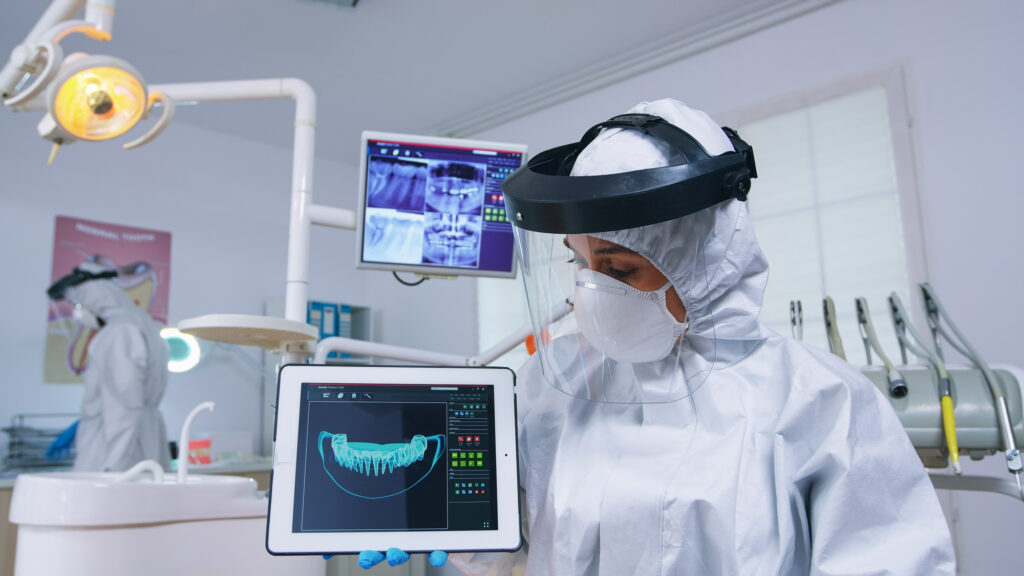
- Show you exactly what’s happening in your mouth
The entire scanning process typically takes just 3-5 minutes—significantly faster than the 10-15 minutes required for traditional impressions.
Benefits for Patients and Practitioners
Improved Patient Experience
The benefits of digital scanning go far beyond avoiding that mouthful of putty:
- Comfort: No gagging, no messy materials, no unpleasant taste
- Speed: Appointments are shorter and more efficient
- Engagement: You can see your own teeth on screen in real-time
- Understanding: Visual tools help you better understand your treatment needs
- Preview: Many systems can simulate your expected results
“Our patients are consistently amazed when they see their teeth displayed on screen during their first visit,” notes Dr. Chen. “Being able to show rather than just tell makes such a difference in helping people understand their orthodontic needs.”
Enhanced Clinical Results
For orthodontists, digital technology provides tools that were unimaginable just a decade ago:
- Superior accuracy: Digital scans are more precise than physical impressions, which can distort or shrink
- Immediate verification: Problems can be spotted and rescanned on the spot
- Better communication: Digital files can be shared instantly with labs and specialists
- Reduced remakes: Fewer errors mean fewer adjustments and shorter treatment times
- Digital storage: No need for physical models taking up space
Treatment Planning in the Digital Age
Perhaps the most significant advantage of 3D scanning technology is how it transforms treatment planning. Using sophisticated software, orthodontists can now:
Visualize Different Outcomes
Modern orthodontic software allows for virtual “what if” scenarios. Your orthodontist can show you how different treatment approaches might affect your smile, helping you make more informed decisions about your care.
Create Custom Solutions
Digital models enable the creation of truly customized orthodontic appliances. Whether you’re getting traditional braces, clear aligners, or retainers, they can be designed to fit your unique dental anatomy with exceptional precision.
“The customization possible with digital technology means more effective treatment with fewer adjustments,” explains Dr. Wright from The American Orthodontic Group. “We’re seeing better results in less time than was possible with traditional methods.”
Track Progress Digitally
With periodic scans throughout your treatment, orthodontists can digitally compare your teeth’s movement to the original plan. This allows for precise adjustments if needed, ensuring you stay on track for your ideal outcome.
Clear Aligners: The Digital Orthodontic Revolution
The explosion in popularity of clear aligners like Invisalign® would never have been possible without digital scanning technology. The entire clear aligner process is digital from start to finish:
- Initial 3D scans capture your current tooth positions
- Software plans the step-by-step movement of each tooth
- You can preview your projected result before treatment begins
- A series of custom aligners is fabricated based on digital models
- Progress is tracked digitally to ensure movement is happening as planned
The American Orthodontic Group has seen tremendous growth in their clear aligner programs, thanks largely to the accuracy and predictability offered by digital scanning technology.
The Environmental Impact
There’s another benefit to digital impressions that many people don’t consider: sustainability. Traditional impressions require:
- Single-use plastic trays
- Impression materials that can’t be recycled
- Physical storage space for plaster models
- Shipping of physical models to labs
Digital impressions eliminate all these environmental impacts, making orthodontic treatment more eco-friendly.
Barriers to Digital Adoption
With all these benefits, you might wonder why every orthodontist hasn’t gone digital. The primary barriers include:
- Investment costs: Advanced scanning systems require significant initial investment
- Learning curve: Staff need training to operate new technology effectively
- Technical challenges: Some complex cases still benefit from traditional techniques
However, these barriers continue to fall as technology improves and costs decrease. The American Orthodontic Group made the investment early, recognizing that the benefits for their patients far outweighed the initial costs.
What to Expect in Your Digital Orthodontic Journey
If you’re considering orthodontic treatment, here’s what you might experience at a digitally-equipped practice like The American Orthodontic Group:
- Initial consultation: 3D scans replace traditional x-rays and impressions
- Treatment visualization: See simulations of your projected results
- Digital treatment planning: Precise, computer-assisted planning for optimal results
- Custom appliance creation: Whether braces or aligners, your treatment is digitally designed
- Progress monitoring: Regular digital scans track your treatment progress
- Final results: Digital comparison shows before-and-after changes
- Retainer creation: Digital models ensure perfect-fitting retainers
The Future of Digital Orthodontics
The technology continues to evolve rapidly. Some emerging trends include:
- Artificial intelligence assistance in treatment planning and monitoring
- Virtual reality interfaces for treatment visualization
- 3D printing of orthodontic appliances in-office
- Remote monitoring through smartphone apps and AI assessment
- Integration with other digital health records for comprehensive care
FAQ: Digital Impressions and 3D Scanning
Are digital impressions covered by insurance?
Most insurance plans that cover traditional impressions will also cover digital ones. The American Orthodontic Group can help verify your coverage before treatment begins.
Are digital scans safe?
Yes! Intraoral scanners use light—not radiation—to capture images, making them extremely safe for patients of all ages.
How accurate are 3D scans compared to traditional impressions?
Studies have shown that digital scans are as accurate as or more accurate than traditional impressions, with error margins of less than 0.1mm.
Can children get digital impressions?
Absolutely! Children often find digital scanning less intimidating than traditional impressions. The quick process and ability to see their teeth on screen makes the experience more engaging.
What if I have a strong gag reflex?
Digital scanning is ideal for patients with sensitive gag reflexes since there’s no material that needs to stay in your mouth for extended periods.
The orthodontic experience has been transformed by digital technology. From eliminating uncomfortable impressions to enabling more precise treatment and better results, 3D scanning and digital impressions represent a true revolution in care.
When considering orthodontic treatment, look for providers like The American Orthodontic Group who have embraced these technologies. The difference in your experience—and potentially in your results—can be significant.
Remember, today’s orthodontic treatment isn’t just about moving teeth; it’s about creating the optimal functional relationship between teeth, jaws, and facial features. The precision offered by digital technology helps ensure you receive the most effective and efficient care possible.
Your journey to a healthy, beautiful smile has never been more comfortable or predictable, thanks to the digital revolution in orthodontic care.