Key Takeaways
- Adult orthodontic treatment is increasingly common, with about 1 in 4 orthodontic patients now over age 18
- Several discreet options exist beyond traditional metal braces, including ceramic braces and clear aligners
- Treatment time for adults typically ranges from 18 months to 3 years
- The benefits extend beyond aesthetics to include improved oral health and functionality
- Many insurance plans offer partial coverage, and flexible payment options are widely available
Are you unhappy with your smile but think you’ve missed your chance for braces? Think again! Adult orthodontic treatment is more common than ever, with approximately 25% of all orthodontic patients being over the age of 18. The American Orthodontic Group regularly sees patients in their 30s, 40s, 50s, and beyond who achieve remarkable results with braces.
This comprehensive guide will walk you through everything you need to know about adult braces—from treatment options and costs to what to expect during the process. Let’s explore why it’s truly never too late for the smile you’ve always wanted.
Why Adults Choose Braces
Many adults consider orthodontic treatment for reasons that go well beyond aesthetics:
Reasons Adults Get Braces
- Boosted confidence: A straighter smile can dramatically improve your self-esteem in both personal and professional settings
- Improved oral health: Properly aligned teeth are easier to clean, reducing your risk of cavities and gum disease
- Better functionality: Correcting bite issues can alleviate jaw pain, improve chewing, and reduce abnormal wear on teeth
- Addressing unresolved childhood issues: Many adults didn’t have access to orthodontic care as children
- Life changes: Major life events like career changes or weddings often motivate adults to finally address their smile concerns
“We see many adults who tell us they’ve been self-conscious about their smile for decades,” says Dr. Jennifer Lee from The American Orthodontic Group. “The joy and confidence they gain from treatment is incredible to witness.”
Types of Braces for Adults
Today’s orthodontic options offer more variety, comfort, and discretion than ever before:
Traditional Metal Braces
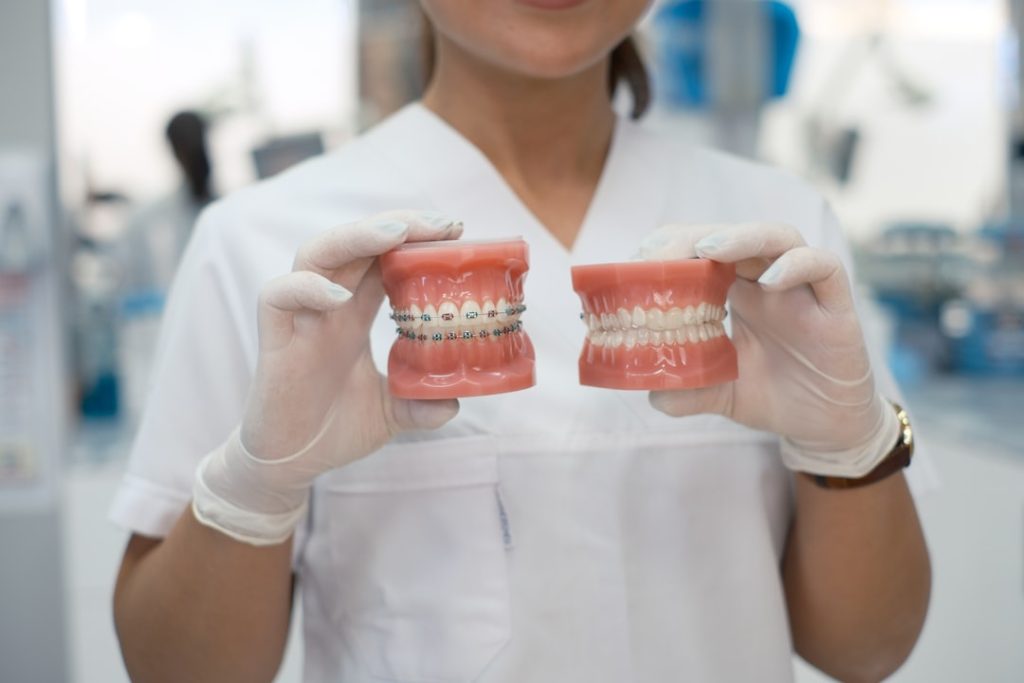
The most cost-effective option, modern metal braces are smaller and more comfortable than those from previous decades. While the most visible option, they remain highly effective for complex cases.
Ceramic Braces
These function like metal braces but feature tooth-colored or clear brackets that blend with your natural teeth. They’re less noticeable than metal but slightly more expensive.
Lingual Braces
Placed behind your teeth instead of in front, lingual braces remain completely hidden from view. They typically cost more and may not be suitable for all orthodontic issues.
Clear Aligners
Systems like Invisalign® use a series of clear, removable trays to gradually shift teeth. They’re nearly invisible and can be removed for eating and cleaning, making them popular among adults. The American Orthodontic Group offers consultations to determine if you’re a candidate for this option.
Self-Ligating Braces
These use a specialized clip instead of elastic bands to hold the wire, potentially reducing appointment frequency and discomfort. They come in both metal and ceramic options.
The Adult Braces Process
Initial Consultation
Your journey begins with a comprehensive examination. At The American Orthodontic Group, this typically includes:
- Digital X-rays
- 3D scanning of your teeth
- Discussion of your goals and concerns
- Review of treatment options suitable for your specific case
Treatment Planning
Based on your examination, your orthodontist will develop a customized treatment plan addressing your unique needs. This plan outlines:
- Recommended type of braces
- Estimated treatment duration
- Cost breakdown and payment options
- Expected outcomes and limitations
Active Treatment
The active treatment phase involves regular appointments to monitor progress and make adjustments. For traditional braces, expect visits every 4-8 weeks. Clear aligner users may have appointments every 6-12 weeks but will change their aligners at home every 1-2 weeks.
Retention Phase
After your braces come off, the retention phase is crucial for maintaining your results. You’ll typically receive:
- A removable retainer to wear at night
- Possibly a permanent retainer bonded to the back of certain teeth
- Instructions for long-term care
Cost Considerations
The investment for adult braces typically ranges from $3,000 to $8,000, depending on:
- Type of braces chosen
- Complexity of your case
- Treatment duration
- Geographic location
- Provider expertise
Many people are surprised to learn that insurance often provides partial coverage for adult orthodontics. The American Orthodontic Group works with patients to:
- Verify insurance benefits
- Offer interest-free payment plans
- Provide flexible financing options
- Accept FSA/HSA funds
- Sometimes offer discounts for payment in full
Common Concerns for Adult Patients
Pain and Discomfort
Most patients experience some soreness when braces are first placed and after adjustments. This typically subsides within a few days and can be managed with over-the-counter pain relievers. Today’s orthodontic techniques cause significantly less discomfort than in past decades.
Treatment Duration
Adult treatment often takes longer than treatment for adolescents because adult bones are no longer growing. Typically, adults wear braces for:
- 18 months to 3 years for comprehensive treatment
- 6 to 12 months for limited treatment focusing only on certain teeth
Impact on Professional Life
Many adults worry about how braces will affect their professional image. Options like ceramic braces and clear aligners have made this much less of a concern. Additionally, the growing normalization of adult orthodontics means seeing adults with braces in professional settings is increasingly common.
Oral Hygiene Challenges
Maintaining excellent oral hygiene is admittedly more challenging with braces. Your orthodontist will provide specialized tools and techniques to help you keep your teeth and gums healthy throughout treatment.
Special Considerations for Adult Treatment
Adult orthodontic treatment differs from treatment for children in several important ways:
Existing Dental Work
Many adults have fillings, crowns, or bridges that may complicate treatment. Your orthodontist will work around these restorations or coordinate with your dentist if modifications are needed.
Bone Density
Adult bones are denser and no longer growing, which can make tooth movement slower and sometimes more challenging than in children.
Gum Health
Adults are more prone to gum disease than children. A thorough periodontal assessment is essential before beginning orthodontic treatment, and some adults may need treatment for gum issues before braces can be placed.
Tooth Wear and Missing Teeth
Years of use, grinding, or previous extractions can create spaces that may need to be addressed differently than in younger patients. Sometimes this requires coordination with a restorative dentist.
Success Stories
The American Orthodontic Group has helped thousands of adults transform their smiles. Take Sarah, a 42-year-old marketing executive who had lived with crowded lower teeth her entire life. After 24 months in ceramic braces, she not only achieved a beautifully aligned smile but also resolved chronic jaw pain she’d experienced for years.
Or consider Michael, a 56-year-old who chose clear aligners and completed treatment in 18 months. “I regretted not getting braces as a teenager for decades,” he shares. “Now I can’t believe I waited so long. The process was so much easier than I expected.”
FAQ About Adult Braces
Am I too old for braces?
No! There is no upper age limit for orthodontic treatment. As long as your teeth and gums are healthy, you can benefit from braces at any age.
Will braces affect my speech?
You may experience minor speech changes initially, particularly with lingual braces or clear aligners. Most people adapt within a few days to a week.
Can I still get braces if I have dental implants?
Yes, though implants cannot be moved orthodontically. Your treatment will be designed to work around implants, which can sometimes limit options.
How will I eat with braces?
You’ll need to avoid certain foods with traditional braces, particularly those that are very hard, sticky, or chewy. Clear aligner users can remove their trays for meals, allowing normal eating.
Will I need to take time off work for appointments?
Most adjustment appointments take 20-30 minutes. The American Orthodontic Group offers early morning and evening appointments to accommodate working professionals.
Getting braces as an adult requires commitment, but the lifetime benefits to your confidence, oral health, and overall well-being make it a worthwhile investment. With more discreet options than ever before and flexible payment plans available, adult orthodontic treatment is more accessible than at any time in history.
The American Orthodontic Group specializes in adult orthodontics and understands the unique concerns and needs of mature patients. Their experienced team can guide you through each step of the process, from initial consultation through your final reveal and retention plan.
Remember, it’s never too late to invest in your smile. The confidence that comes from knowing your teeth look their best can be life-changing at any age. Whether you’re 25, 45, or 65, the perfect time to begin your journey to a straighter smile is now.